Thursday, December 2, 2010

A pound of meat in a five pound box

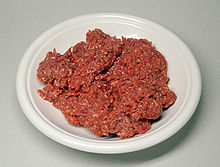
Image courtesy Wikipedia

Imagine yourself going to the meat counter to pick up a pound of hamburger.   (Vegetarians, bear with me on this one).  Anyway--you place your order with the butcher, and he comes back and hands you a container that weighs as much as a small newborn.

"Excuse me... I asked for a pound of the ground chuck", you point out.

"That is a pound", he said, pointing to the label.  Sure enough, the printed label states that the meat weighs a pound.  He whispers, "actually, it's about a half an ounce over--but I only charged you for a pound".

You examine the box, pick it up again, and say to yourself, "this has got to weigh five or six pounds."  Noting that the box is unusually sturdy, you ask the butcher the obvious question--"if there's only a pound of hamburger, how much does this box weigh?"

"The box?  Oh, it's five pounds."

"Five pounds?"

"Yeah.  Protects the meat in shipment.  New joint USDA-NTSB regulations.  Has the buff strength of a locomotive, I hear."

"What for?  I'm gonna throw this stuff on the grill as soon as I get back home!" you protest.

"Don't ask me, pal--I just work here.  I don't make the rules; I just do what I'm told.  Anything else I can get for you today?"

Weight Ratios

This obviously far-fetched scenario is intended to illustrate the concept of a weight ratio.  The weight ratio of  a container or vehicle is the ratio of the vessel, divided by the weight of whatever it is being transported or stored--whether it be a pound of ground beef, or 150 pounds of human being.   The idea of using a 5-pound container to transport a pound of meat is obviously ridiculous.

But in the passenger transportation field, a 5:1 ratio--five pounds of container for every pound of person, is actually quite unremarkable.  Non human-powered vehicles need to transport themselves; requiring motors of some sort; and they also need a power source--fuel, batteries, external power--both of these things add significant weight.  We also expect them to travel at speeds at which the occupants may be endangered by a collision if not adequately protected, to be weatherproof, and to have other creature comforts that don't make the journey unbearable for the persons riding them.  And we expect them to be flexible in the number of passengers they can carry, and to be capable of carrying luggage or other freight.

As a result, unless one is riding a bicycle, a person's typical ride will weight in at several times what the person weights.

Typical values

Let's quickly look at typical weight ratios involved in transportation; first including self-propelled, fully enclosed vehicles.  We'll assume people weigh 150 pounds (the average adult weight is actually a bit higher) in all our calculations.  It makes the math easier, and I'm lazy.  While I've generally tried to incorporate SI units in my posts, I'll neglect that courtesy this time around, also because I'm lazy. 

For passenger cars, there's quite a wide variety in both weight and passenger capacity.  Many larger cars and SUVs weigh two tons or more; and it's not unheard for people to commute in vehicles such as a Ford F350 pickup, which approaches 5 tons.  If we assume a typical large car, weighing at two tons, and a single occupant, that gives us a weight ratio of about 27:1.  Most subcompacts (i.e. Honda Civic couples, Mini Coopers) check in at about 2500 pounds, for a ratio of 16.7:1.  A SmartCar Fortwo, the smallest production car you'll commonly find in the US, has a curb weight of 1600 pounds (and seats only a single passenger); for a ratio of just under 11:1.   If you carpool, the weight ratio drops dramatically--four commuters in a Civic will produce a weight ratio of just over 4:1.  These weights all exclude fuel, although cars are heavy enough by themselves that there is seldom a need to consider wet vs. dry weight.

Public transit vehicles vary widely with occupancy, but not so much between vehicles.  A good rule of thumb for a FRA-exempt large transit vehicle (a 40' bus or larger, or a streetcar, LRV, or high-platform metro train) is that it will weight 1000 pounds per linear foot--this rule works surprisingly well for back-of-the-envelope calculation of weights.  Two other rules of thumb which also work pretty well for many transit vehicles is a design-load passenger capacity of 1.5 passengers per foot, and a crushload capacity of 2.5 passengers/foot.  Plugging in our 150-pound weight estimate, this reveals that many transit vehicles have weight ratios of about 4.4:1 at design load, 2.7:1 at crush loads.  That said, transit vehicles do rather poorly at typical social-service-route loads--if there's 10 people on a 40' bus (weighing in at 20 tons), that's the same weight ratio as a single rider in a large car.  (Fortunately, as discussed below, the bus has a higher per-passenger fuel economy than the car, even n this dismal case). 

What about two-wheelers?  Motorbikes typically have wet weights (weight of the bike plus fuel and fluids and battery) ranging from 300 pounds for a 150cc standard up to 600 pounds or more for a big fat Harley cruiser.  These numbers correspond to ratios of 2:1 and 4:1 respectively.  On the other hand, decent bicycles can be found weighing 20 pounds or less (and people will spend tons of money to get down to 15 pounds)--now we're talking ratios under 1:5, or 0.2:1.  

What to make of all of this?

Weight ratio has a direct impact on the fuel efficiency of a given mode--though the effect isn't quite as dramatic as one might expect--a typical motorbike has a fuel economy in the range of 2x-4x a typical passenger car; for instance--a much smaller multiplier than raw weight ratio would predict.  Likewise, transit vehicles actually do better on energy efficiency vs autos than weight ratios would predict; a full 40' bus will have better energy use per passenger than a full Honda Civic.  (Many transit critics claim busses are less efficient than cars based on average occupancy--most bus agencies have runs or entire routes which are far from full; however in that case, the marginal cost of an additional passenger is almost zero).  While a 40' bus has a weight ten times or more a typical car, it doesn't have an engine ten times as powerful.

However, excluding the case of the bicycle (or of walking, which has a weight ratio of essentially zero), even the best examples of motorized transport have ratios greater than 2:1--for every pound of passenger to be moved, at least two pounds of vehicle must be moved.  And this represents a whole lot of energy which is wasted, every day.

A blog post by Brad Templeton suggests that the wave of the future might be in "ultralight vehicles" (not to be confused with ultralight aircraft)--self-powered vehicles designed for commuting applications, which weigh more than a bicycle but considerably less that a modern motorcycle.  Mopeds come close to this goal, generally weighing no more than 200 pounds or so.  Brad seems to be thinking of some sort of self-stabilizing, motorized bicycle or tricycle with a fiberglass shell (a design which in various forms has been around for years).

There's also lots of discussion of designing lighter large transit vehicles; as it is with larger vehicles that one is more likely to be able to pull out weight without sacrificing things like structural stability.  Prototypes busses and trains weighing  half of what conventional vehicles  weigh have been shown, although many of these do not yet meet relevant safety standards, and such vehicles do not seem to yet be in production, let alone in widespread use.  (For exclusive-ROW closed BRT/LRT systems, waiver of these standards might be a possibility).

But the bottom line is:  The world is entering an era (and may be there already) in which energy is increasingly expensive to produce.  That transportation of people frequently requires that the vehicle weighs several times what the passengers weigh--that we need to haul so much deadweight around to go somewhere--is a Big Problem.  And solutions to this problem will be increasingly important in the future.

Monday, November 29, 2010

The Flashing Red Lights

Picture, in your head, a transit bus. Now picture in the other side of your head, a garden-variety yellow school bus.
TriMet bus (courtesy Wikipedia)

What are the differences--vehicle-wise--between the two? For one thing, the school bus will likely have a single boarding door (ignoring emergency exits, the locations and usage of which are drilled into the brains of school-age children round the country) and a coach-style seating configuration, whereas transit busses typically have two doors (one for entry and one for exit), if not more, and a whole lot of standing room. At a given stop, either people get on or get off the school bus, but seldom both--whereas simultaneous entry and egress is the norm on transit. School busses don't have fare collection infrastructure, and are sturdily built but infamously uncomfortable--it's been often suspected that much aversion to public transit (especially the rubber-tired sort) in those unfamiliar with it derives from unpleasant experiences on the big yellow bus as a child.
A school bus (courtesy Wikipedia)

But the difference I want to discuss is on the outside of the bus, not on the interior. School busses are equipped with flashing red lights, with which they can halt traffic when they stop to pick up or let off passengers. Public transit is not so equipped--while some public transit agencies (including TriMet) nowadays drive busses with flashing "yield" signs on the back, traffic still goes whizzing on by when one is stopped at the curb.

A safety feature?

Stop arm (courtesy Wikipedia)
What is the reason for this dichotomy? The obvious answer is for the safety of children--many of whom are too small for motorists to clearly see, or not well-versed in the art of safely crossing a street. However, there are a few holes in the safety argument. The relevant law in the state of Oregon is ORS 811.515 (12), which states:
12) Bus safety lights shall only be operated in accordance with the following:


(a) The lights may be operated when the vehicle is stopping or has stopped for the purpose of loading or unloading students who are going to or from any school or authorized school activity or function.


(b) The lights may be operated when the vehicle is stopping or has stopped for the purpose of loading or unloading workers from worker transport buses.


(c) The lights may be operated when the vehicle is stopping or has stopped for the purpose of loading or unloading children being transported to or from religious services or an activity or function authorized by a religious organization.


(d) The lights may be operated when the vehicle is stopping or has stopped in a place that obstructs other drivers’ ability to see the bus safety lights on another vehicle.


(e) Notwithstanding any other paragraph of this subsection, the lights shall not be operated if the vehicle is stopping or has stopped at an intersection where traffic is controlled by electrical traffic control signals, other than flashing signals, or by a police officer.


(f) Notwithstanding any other paragraph of this subsection, the lights shall not be operated if the vehicle is stopping or has stopped at a loading or unloading area where the vehicle is completely off the roadway.

The first thing to note is that two other categories of busses--worker transport vehicles (provided by an employer to transport workers to and from work) and church busses (provided by a religious institution to transport parishioners)--also are permitted to operate safety lights (as the law calls them)--though church busses require a special permit to do so (see ORS 818.260 for more info on that). Neither of these categories applies exclusively to children, and worker transport busses, by definition, are likely to only be used for transporting those of legal working age (adults and adolescents). On the other side of the coin, Portland Public Schools contracts with TriMet to provide transport for high school students (who are provided with a bus pass good through the school year)--and despite being used in this role, TriMet busses are not entitled to operate safety lights.  Similar arrangements are found in many other large cities, and many employers provide bus passes to their employees; a fact which doesn't make the local transit agency's busses "worker transport busses" either.

In short, while safety is probably a good guess, and probably a big part of it--it isn't the whole picture. My suspicion is that this dichotomy in law is not due to any sinister forces or anti-transit conspiracy; but simply due to different codes of law evolving over the years.

Should transit vehicles have flashing lights?

Which brings us to the obvious question: Should transit busses be equipped with flashing lights, assuming the law were amended to permit this? Several advantages to the agency and its riders would immediately come about:
  • Less concern with having to merge back into traffic after the stop is complete. It's long been observed that pullout-stylet bus stops are not there for the benefit of the bus or passengers, but for motorists who get to whiz by a stopped bus rather than being stuck behind. Pulling out of traffic to stop naturally requires pulling in to traffic to continue the journey. Even though busses in many jurisdictions have the right of way over cars in completing this maneuver; if the bus stop precedes a red traffic signal, it's often the case that the lane is full of stopped cars. Were the bus to stop all traffic, it would then have an empty road in front of it when it continues. (This is one advantage that the Portland Streetcar has over busses, at least where it currently operates--cars are seldom blocking it when it leaves a stop, as they are all stuck behind).
  • A better pedestrian environment. Many transit users have experienced the frustration of needing to board a bus which stops across a busy street--and watching their bus come and go while they wait for the crosswalk signal to change. Schoolchildren do not suffer from this problem--they simply wait on the opposite side, and when the bus comes and stops traffic, then they cross and board.
  • More convenient bus-bus transfers, for the same reason. Many transfers occur at busy intersections where bus lines intersect, and getting from one line's stop to the other requires crossing said busy intersection.

Of course, the political difficulty is that motorists will be inconvenienced by this--and there are no doubt many roadhogs out there who tolerate school bus laws because they have children themselves, they have far less sympathy for transit users. Likewise, I expect traffic engineers to start screaming bloody murder were this idea to be advanced.  (And it wouldn't surprise me to learn that longtime bus passengers might resent this as a nanny-state intrusion, just to be ornery).  And were this crazy idea to become law, I'd happily exclude places like the Portland Transit Mall, for obvious reasons.

It's worth noting that the dedicated "school bus", complete with flashing lights, is a predominantly North American phenomenon.  In much of the rest of the world, children take public transit (as there is a far greater likelihood of finding usable public transit for them to take), and like public transit here, the vehicles havelack the ability to stop traffic.

But if a protected pedestrian environment is appropriate for children, workers, and churchgoers whose rolling stock happens to be owned or operated by the school district, employer, or parish in question--why is it not appropriate for the rest of us, including those children, workers, and churchgoers whose rolling stock is owned/operated by a transit agency instead?

And who knows--maybe this is an idea that will catch on overseas.

Thursday, November 4, 2010

Stop me if you've heard this one before

Many cultures view history as cyclical.  US politics in the past century or so certainly has its interesting parallels...


It was the year 1932.

In the aftermath of a major economic crisis [The crash of 1929 and the Great Depression], a new activist President was elected to office [FDR]. A former governor, and excellent communicator, and a skilled politician, this new President swept aside the old economic order which had long dominated the political discourse [strict balanced budges and tight monetary policy] and which seemed unable to deal with the circumstances of the time, and replaced it with a new one [Keynesian economics], and in the process built a political dynasty which would endure for a generation. This president would be succeeded by his vice-president [Truman], who would continue much of his predecessor's policies. A major global conflict [World War II] would be won, and the US would enter yet another war [Korea] to defend an ally [South Korea] from invasion. But cracks would start to appear in the political coalition when the predecessor enacts policies that infuriated parts of his base [integration of the military].

A moderate of the other party [Eisenhower] would be elected to the Presidency. This moderate would continue many of the policies of the dominant party, and as a result be despised by many of his party's base [Birchers, anti-Communists].  The country would nonetheless enjoy a decade of prosperity, and at the conclusion of the moderate's second term, his vice-president [Nixon] would run for office--and lose, in a close election, to the scion of a powerful New England political dynasty [JFK].

The next decade would be a decade of turmoil, as a national tragedy would strike [JFK's assassination], the country would get involved in a long, drawn-out war for dubious reasions [Vietnam]. The president would enact policies which were widely praised as reforms by many [Civil Rights, Great Society], but which would outrage the opposition--and many of the dominant party's own base. The political coalition which had dominated politics for a generation would further disintegrate, with many members of the coalition defecting to the other party [Southern Democrats], and the President [LBJ] would be publicly repudiated by his own party.  A longstanding politician from the party [Humphrey] would run for the presidency and lose to a skilled politician widely hailed as a reformer [Nixon].

The defeated party would quickly be dominated its more extreme factions [anti-war movement] , which would mount a challenge to the party establishment and take over much of the party machinery. Members of this energized faction would hold rallies around the country and dominate the political discourse. Meanwhile, the President's party leaders would outrage many of his base [conservatives] by continuing the policies of his predecessor [economic liberalism], and enacting widely unpopular policies [price controls] in order to deal with challenging economic conditions [rising inflation]. The President's first term was also noted for a highly controversial economic reform [abandonment of the Gold Standard]. The midterm elections would be disastrous for the President's party [the GOP], particularly in the House, as the energy of the other side's fired-up base, along with a general disillusionment among the rest of the electorate would produce significant gains for the opposition. The President's party would do better in the Senate however.

The "extreme" faction within the opposition party would continue to do battle with the party's establishment, resulting in the nomination for President of a candidate widely considered unelectable [McGovern]. Despite a major economic crisis [1973 oil shock], the President would be easily re-elected. In his next term, the US would be forced to end its longstanding overseas war [Vietnam] on less-than-victorious terms. A major scandal [Watergate] would result in the President's fall from grace, and his replacement, a gaffe-prone elder statesman of US politics [Ford], would be easily defeated in the next election, by an idealistic governor from the other party [Carter]. However, the new President would lack the support of the party's establishment, would be regarded as politically ineffective, and would be continually dogged by continued economic malaise [stagflation], as well as a major foreign-policy humiliation [Iran hostage crisis], and would only serve one term in office. His defeat would mark the sharp end of the political dynasty which had long reigned.

[breather]


It was the year 1980.

In the aftermath of a major economic crisis [Numerous oil shocks and stagflation], a new activist President was elected to office [Reagan]. A former governor, and excellent communicator, and a skilled politician, this new President swept aside the old economic order which had long dominated the political discourse [Keynesian economics], and which seemed unable to deal with the circumstances of the time, and replaced it with a new one [supply-side economics, large-scale deficit spending], and in the process built a political dynasty which would endure for a generation. This president would be succeeded by his vice-president [George H.W. Bush], who would continue much of his predecessor's policies. A major global conflict [the Cold War] would be won, and the US would enter yet another war [Iraq I] to defend an ally [Saudi Arabia] from invasion. But cracks would start to appear in the political coalition when the predecessor enacts policies that infuriated parts of his base [raising taxes].

A moderate of the other party [Clinton] would be elected to the Presidency. This moderate would continue many of the policies of the dominant party, and as a result be despised by many of his party's base (progressives]. The country would enjoy a decade of prosperity, and at the conclusion of the moderate's second term, his vice-president [Gore] would run for office--and lose, in a close election, to the scion of a powerful New England political dynasty [Dubya].

The next decade would be a decade of turmoil, as a national tragedy would strike [9/11], the country would get involved in a long, drawn-out war for dubious reasions [Afghanistan, Iraq]. The president would enact policies which were widely praised as reforms by many of his allies [financial deregulation, Medicare Part D], but which would outrage the opposition--and many of the dominant party's own base. The political coalition which had dominated politics for a generation would disintegrate, with many members of the coalition defecting to the other party [blue-collar whites], and the President [Bush] would be publicly repudiated by his own party. A longstanding senator from the party [McMain] would run for the presidency and lose to a skilled politician widely hailed as a reformer [Obama],

The defeated party would quickly be dominated its more extreme factions [tea party movement] , which would mount a challenge to the party establishment and take over much of the party machinery. Members of this energized faction would hold rallies around the country and dominate the political discourse. Meanwhile, the President's party leaders would outrage many of his base [progressives] as well as the opposition by continuing the policies of his predecessor [pro-business politices], and enacting widely unpopular policies [the stimulus] in order to deal with challenging economic conditions [rising debt, Great Recession]. The President's first term was also noted for a highly controversial economic reform [HCR]. The midterm elections would be disastrous for the President's party [the Democrats], particularly in the House, as the energy of the other side's fired-up base, along with a general disillusionment among the rest of the electorate would produce significant gains for the opposition. The President's party would do better in the Senate however.

...and that's where we are today.


Quite a few pundits are convinced that the GOP will indeed nominate Sarah Palin for the Presidency in 2012. Peter Beinart has already called Palin the new McGovern, and the GOP unity which was exhibited prior to the election is already starting to crack, as the Tea Partiers and the GOP establishment do battle over the agenda of the 112th Congress. (Never mind that Dems still control the Senate).

Of course, if this cyclical history continues, it implies that Obama is NOT the "liberal Reagan" (who in turn was not the "conservative FDR"), but the Democrat's Nixon. Some parallels are apparent--many conservatives utterly distrusted Nixon for his economic policies. Of course, comparisons to Nixon may seem outrageous to Obama supporters (including myself), as Obama has--so far at least--not had a whiff of scandal during his administration, and we all know what happened to Nixon. (Still, the Biden/Ford comparisons are tempting... :)

But if this continues, a few other questions:

* Who will be the "conservative Carter"? The obvious candidate for that is Mike Huckabee, an earnest (and devoutly religious) Southern governor, who has serious issues with much of his party's establishment.

* And if Obama is not the next "liberal Reagan"--a likely possibility, as it seems the country isn't ready for a steadfast fire-breathing liberal in the White House--who is?

Wednesday, November 3, 2010

Federal Funding Fun and Games Revisited

Back in July, I ranted about the current system of transit funding in the United States, wherein local projects generally depend on an injection of cash from Uncle Sam for viability--money that was, of course, originally sent to Washington by local taxpayers.  To summarize the prior article, the presence of the US government as middleman produces several distortions in the funding process.
  • Federal money is viewed as "free".  While it isn't free in a strict sense, it is "free" in that it is completely disconnected from federal taxes collected.  Much like widening a freeway causes it to attract more cars (or improving a transit line attracts more riders), government agencies passing out "free" money causes it to be overconsumed....
  • ...and often times, the point seems to be dining at the federal trough, rather than improving transit outcomes.
  • And given that, there are incentives for costs to be escalated in order to increase the federal match--lest the money go to some other jurisdiction.
  • The process of determining who gets what can be overly political.  Some projects get funded via earmark, and those that go through regular appropriations have to jump through oodles of (expensive) red tape to prove their worth.  And different types of projects are more likely to be funded depending on who occupies the White House
Given all the brouhaha over various expensive local projects such as the Columbia River Crossing (CRC) and Milwaukie MAX, both of which have price tags well north of a billion US dollars, and not to mention the brouhaha over completed local projects (such as WES) widely regarded as boondoggles, let me add a few more reasons to the list.
  • The difficulty of achieving Federal funding makes delaying or descoping projects difficult.  Both CRC and MLR are attracting a lot of controversy due to their high price tags, given the recession.  A plausible argument is that We Should Be Saving Money In A Recession--an argument which is more plausible given the large public debt at all levels of government.  (We'll ignore for now the Keynesian ideal that spending on infrastructure is a good thing to do in a recession--which is one argument for federal funding, in that the Feds are the only layer of government capable of counter-cyclical investment, assuming there exists the political will to do so.)  However, there's a problem:  Major capital projects which require handouts from Washington (and Salem) can't easily be delayed--they can only be killed.  (They can be restarted, of course, but doing so often requires starting over from square one).  If things don't happen on schedule, the money disappears--and there is generally no promise that it will be restored in future appropriations.  (This argument is a favorite of the CRC committee--which loves to assert that if the project scope is changed, the project will never get built, because Uncle Sam will spend his money elsewhere.)
  • On the opposite side of the coin--this makes it easy for hostile politicians to kill worthwhile big-ticket projects.  New Jersey governor Chris Christie cancelled the ARC project--decades in the making--with a stroke of his pen; consensus is that a new tunnel between Jersey and Manhattan will require additional decades to resurrect, should a political consensus to do so arise.  
  • The current rules excluding operational costs from Federal funding have long been a source of contention.
  • Finally, FTA rules require agencies to live with their mistakes.  Jarrett tweeted a reasonable question upon learning that Measure 26-119 failed, wondering if TriMet might plug the budget hole by killing WES--a service that has had extremely low ridership but at a high operational cost, and which has given the agency a bit of a black eye.  Ignoring the local politics, it would make sense--except that then the FTA would then likely demand a refund of the money paid to help fund the project.  Even if TriMet were to "suspend" the service--shutting it down until conditions improved, it wouldn't matter.  (And no, the FTA wouldn't then return the money back to TriMet were the service to re-open under better economic conditions).

Saturday, October 16, 2010

Poop, and your water bill


This is the first post (excluding announcements and such) that I've written in quite a while, and I must apologize.  Parts of this post are rather... crappy.  No, not the quality (which I leave to you to decide), but the subject.

One issue many metropolitan areas face, especially those (such as Portland) which are constrained by geography or law, is the wailing and gnashing of teeth that occurs when areas which were previously rural, become urbanized.  Much of this upset is understandable--people who are able to afford to do so often live in a place which suits their preferred lifestyle (good or bad), and react strongly when someone proposes upsetting their apple cart.  Annexation by a city and upzoning, two things which frequently happen as urban areas expand, are particular sources of upset.  Some objections are rooted in fears and feelings of the unknown--a natural action when one's home is perceived to be under threat.

But many objections are financial.  Cities generally levy higher taxes, and many rural and suburban-fringe dwellers don't care one whit (or may view as hostile) urban services such as sidewalks, stricter code enforcement, parks, libraries, and the like.  (And in some cases, free-riding on the nearby city is possible).  This post discusses one common financial objection to urbanization, along with ways to mitigate it.  The objection?

The sewer.

What goes in, must come out

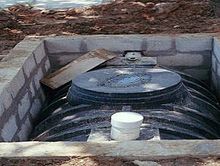
Image courtesy Wikipedia
I live in the city of Beaverton.  My parents live in the Hamlet of Beavercreek, just outside the urban grown boundary and just south of Oregon City.  In any given month, my water bill is twice what theirs is on a per-gallon basis.

Why?

It isn't due to different prices for H2O; or because the local water officials here are incompetent.  (Indeed, their water provider, Clackamas River Water, has a knack for getting in the news for all the wrong reasons). 

It's because I (and other city-dwellers) don't just get charged for the water that comes into our homes--we also get charged for the water that comes out.

The City of Beaverton water and sewer department charges an US$8/month base fee for most users, plus $2.22 per unit of water.  (One unit = 100 cubic feet = 748 US gallons = 2831.5 liters, for those keeping score at home). But that's not all.  The sewer rate is nearly $25 per month plus $1.50 per unit of water consumed, though only water use in the winter months is actually measured (based on the assumption that much water consumed in the summer is going on the lawn, not down the drain).  But wait, there's more!  There's also a surface water fee, for the storm drains and downspouts, based on the size of the footprint of the buildings and pavement on the property.  Each 2640 square feet (or fraction thereof) of impervious surface costs $6.75.

Mom and Dad?  They only pay for their water supply.  Their sewage disposal needs are served by a septic tank in the backyard (they live on a 1/2 acre lot).  Every five years or so, they have to pay for a honey truck to come out and pump out the tank (and occasionally endure tasteless remarks from the driver concerning the contents thereof), but other than that, it's free to them.  The downspouts on their house, rather than leading into a storm system, lead into the garden.  The streets in their neighborhood have a glaring excess of potholes--but a notable absence of manholes.

As they live on a 1/2 acre lot (in a subdivision which was built prior to Oregon's pioneering land use law in the early 1970s), this arrangement is probably satisfactory from an environmental point of view.  Given that their neighborhood is located at a lower elevation than the nearest sewer line, it seems highly unlikely that sewers will be installed anytime soon.  Unlike pressurized supply lines, which can be routed up hills, sewage pipes depend entirely on gravity (or on pump stations) for their flow.  Sh*t decidedly does not roll uphill. 

Fair?

But the big question which I now pose is:  Is this arrangement equitable?  I'm not complaining about my bill--one thing I think is generally a good public policy is to eliminate externalized costs.  I, and other city residents with similar billing arrangements, are being charged for our contributions to the problem of sewage disposal, and the particulars of that arrangement--the more water you use, the more crap you're likely flushing down the toilet, therefore the more you pay--are entirely satisfactory.  And sewer and storm infrastructure is expensive to build, install, maintain, and operate. 

Instead, the question I ask is this:  Should rural (and semi-rural) homeowners be exempt from paying sewage disposal costs?  Obviously, they aren't "contributing" to the amount of stuff that goes into the sewers--and as noted above, there are many rural neighborhoods where installing sewers would be prohibitively expensive (and are low enough density that it isn't necessary).  On the other hand, this arrangement creates an incentive to resist sewer installation when property on the fringe of a city becomes urbanized:  from the point of view of a homeowner, a sewer connection is almost entirely a liability.  The primary benefit of sanitary sewer systems--a clean water supplies--is enjoyed by everyone within a community, not just those hooked up to the sewer.  And when excess numbers of septic tanks start resulting in polluted water supplies, it can get very expensive very quickly, as folks in east Multnomah County discovered some years ago. 

A better way

So here's a quick and dirty proposal. 
  • All homeowners (and commercial customers as well) who are supplied potable water from utilities, ought to pay a waste disposal fee based on their wintertime water consumption--regardless of of how they dispose of toilet waste.  (Differing arrangements ought to apply to agricultural and industrial water users, and those getting water from on-premises wells might be exempted as well--as might sufficiently low-density properties well outside of any urban area). 
  • Proceeds from waste disposal fees would be then dispersed to sewer and stormwater districts as appropriate to fund operations.
  • In addition, some portion of the fees would be held in reserve to pay for expansions to sewerage systems, including covering the cost of residential conversions.  This last item is important--in exchange for paying a waste disposal fee on the same terms as urban residents, rural and suburban residents would no longer need to worry about an unexpected four-figure bill for conversion of their home to sewer service.  Other than a backhoe in the backyard, being hooked up to a sewer system would become a non-event for homeowners, rather than a potential financial catastrophe.
Of course, many rural homeowners, especially in remote places where the chances of a sewer being installed are zero, aren't likely to like this proposal.  However, their water bill isn't lower because they are more self-reliant or more efficient in their water consumption--their bills are presently lower because they are being allowed to externalize their costs.  At very low levels of density, this is acceptable, much like a glass of wine at dinner won't pickle anyone's liver.  But too many septic tanks in a given area, much like too many drinks in one evening, and and problems start to arise. 

(Were I more cynical than I am, I might suggest that one of the primary benefits of a rural lifestyle is the abundant opportunities to externalize costs at a scale which would be intolerable in the city.  Were I more charitable than I am, I might respond that rural communities often lack a critical mass of both capital and personnel to deal with these issues as efficiently as cities can).

To summarize.  Disposal of sewage waste is a social problem, not an individual one.  The preferred means for dealing with large amounts of the stuff is a large-scale communal system.  The benefits are social as well--being hooked to the sewers confers little benefit on an individual homeowner, but having homeowners hooked to sewers confers a significant benefit to society at large.  The current arrangement permits costs to be externalized, and creates a strong incentive for homeowners to resist the preferred solution (sanitary sewer systems) for urban environments.  Thus, it strikes me as more equitable for everyone to be charged on the same schedule for sewage disposal and treatment, regardless of the particulars of their home's plumbing.  Homeowners should pay a higher bill for flushing the loo more; but not be penalized simply because they happen to have a sewer connection. 

The state of affairs we have today, essentially, constitutes a subsidy to rural areas at the expense of urban ones.  (One of many such subsidies that could be written about). 

Sorry about that, Mom and Dad. 

Wednesday, October 13, 2010

About that new gig...

Some of you may have already read this, but I've a bit of an announcement to make.  Chris and Bob over at portlandtransport.com, a blog I've participated in quite a bit over the years, have invited me to become a contributor there--and to become a director of the nonprofit which operates portlandtransport.com.  My inaugural post there is here; it pretty much makes the same announcement--and then briefly discusses the Oregonian's opposition to measure 26-119, a tax levy which would provide TriMet with $125 million to improve operations. 

So what does this mean for DHT?  To tell you the truth, I'm not sure yet.  When this blog started, it wasn't intended as a transit blog, but that's what it turned into.  I'll probably continue to write about transit topics here, especially when it gets overly speculative, political, or disconnected from the Portland, OR context.  As portlandtransport.com is a 501(c) nonprofit corporation, a few sorts of political commentary are out of bounds there--particularly where endorsement of candidates is concerned.  OTOH, I may resume more blogging on general political topics--some of which, such as the current state of the US economy and the direction of the political winds, cast a long shadow over technical issues such as transit.  (I can imagine a future in which the US invests greatly in transit in response to rising petroleum prices and temperatures; I can also imagine a future in which an austerity consensus takes hold, and little investment is done on anything.  And I can imagine a few other scenarios even less pleasant than that).

Most of the regular readers here are also readers of PT; but if you aren't, come on over!  There's a much livelier peanut gallery over there than here, but it's still a place where the comments are frequently as interesting as the content.  One longstanding disadvantage of the blog format is that as blogs get popular, the comments section tends to decline in quality; some of the best political blogs either employ a small army of moderators (538 at the NYT), have useless comment sections (i.e Yglesias or 538 prior to the NYT move) or have disabled them altogether (i.e. Sullivan). 

At any rate, portlandtransport is a great place to talk transit, and it's an extremely well-run site.  I just hope that I can uphold the high standards that it has exhibited over the years.

Wish me luck!

Sunday, October 3, 2010

Blogcation

Just a quick note...and a bit of an apology.  It's been several weeks (nearly a month) since the last posting.  I've been on a bit of a blog-cation, I suppose--mainly due to simply being rather busy in Real Life.  My wife's starting up a new career, the kids are back in school, and my own job has been a bit busy of late.  (In this economy, it is quite nice to have one...)

I do want to reassure everyone that I'm fine, however, and intend to resume blogging (with real content :) shortly.  Just needed to decompress for a while.